Showing posts with label Author Interview. Show all posts

Thursday, 10 August 2023

Q&A with Xena Knox

Welcome to our wee Q&A with author Xena Knox.


You can find Xena on Twitter Instagram or Tiktok.


You can find my non spoiler review of Sh!t Bag HERE and it is out to buy from Amazon now.

Now, enjoy our author interview:

Q1. Tell us a bit about yourself, Xena

Just a wee bit - I’m Scottish. I’m straight talking, passionate, fair (I like to champion the underdog) and sometimes a bit scary if you get on the wrong side of me. I don’t just write. I’m good at getting my hands dirty (my nails are awful) digging in the mud growing flowers or mucking around with my horses. I love writing with humour and about gritty reality.

Q2. What made you decide to write your debut

SH!T BAG - my debut YA novel - is an up-close and very personal story about life with ostomies (poo bags in this instance). It’s based on my own life experiences and so the story is a reaction to public negativity or misunderstandings around what it’s like living with an ostomy. I wanted to educate, yes, but in the main, I wanted to change attitudes towards ostomies and people with them (ostomates) by placing the reader in the body of the main character looking outwards. So that they could really feel what it’s like to be judged, degraded, mocked … for something that’s quite literally life or death, or living.
And this includes medical professionals - just because someone technically knows what an ostomy is, works with ostomates or even creates them. This doesn’t mean they have an automatic comprehension or empathy (from a personal and human pov) of what it’s like to live with one day-in-day-out, every waking and sleeping moment.

Q3. The protagonist is 16, why did you choose to write it from the view point of a teenager?

A couple of reasons.
Based on my own interactions, I feel teens don’t have the squeamish preconceptions about ostomies that older parents and grandparents do. So, it felt important to educate and inform (readers) at an early age before misinformation and negativity can creep in.
And, I first became ill at eighteen, so, although I was a little older than Freya, 16 feels an incredibly pivotal age, stepping across the threshold of life from child to adult. It felt ‘right’ to have Freya that age. And I have a tendency to be quite edgy in my language so I really think any younger than 16 and I wouldn’t have been able to have Freya speak in her ‘unique’ voice.

Q4. The book deals with so many important issues, not just ostomies but body image and relationships – was that important for you?

Definitely.
Writing is a funny thing, though. My characters are alive in my head. They’re incredibly complex and nuanced. I know exactly what they ‘would’ and ‘wouldn’t’ do. And so, it can sometimes take until after multiple redrafts before I’m aware of the themes and ‘issues’ (for want of a better term) I’ve addressed or included in my story. They bubble to the surface after placing those ‘real’ characters in certain situations/environments etc.
But to label a couple of those ‘messages’ -
No matter how I repackage them in different characters and stories, I appear to consistently champion respecting other people for being their unique selves. And empowering individuals to define their boundaries and voice them.

Q5. Did you have to do a lot of research for your book and if so, are you are happy to discuss some of it?

Research was minimal and mostly checking for new treatments etc. Like most IBD sufferers (whether you’ve had a bowel resection/ostomy or pouch…) I’m an ‘expert’ on this through sheer crappy luck of having lived it as my life since I was 18, and being educated by surgeons or reading or sharing experiences with others going through similar or worse. I’ve had many, many surgeries, things go wrong, or malfunction, or had to develop my own coping strategies…
You’ve heard it here first – a SH!T BAG exclusive – both Freya’s experiences AND Mel’s, are my lived experiences.

Q6. If readers only take one thing away from reading your book what would you like it to be?

You know yourself and your own body.

Q7. What is next for you?

I’m working on book two. It’s a standalone - so not a sequel to SH!T BAG. It does follow my core values - respecting other people for being their unique selves. And empowering individuals to define their boundaries and voice them.

Q8. Anything else you would like to add?

Ummm, yes!
I have a question for you, Lainy:
Your review of SH!T BAG was bang-on what I was trying, and hoping, to convey. So, I think you get me quite well, so far. What sort of material would you like to see me address in a future novel?

I would keep the same format style, important issues - especially health issues where you are giving the condition(s) a face, a chance for people to humanise and see how careless remarks/behaviours can have such a huge impact. I think it also gives a chance for people to empathise and really relate to something/someone that they maybe otherwise wouldn't. For example the "nickname" and the huge impact/knock on affect it had and things like that, a cheeky remark or "it was just a joke" can really impact someone.

Thanks so much for reading SH!T BAG, championing it and inviting me to this Q&A!
Much love!
Xena Xx

Tuesday, 7 June 2022

Q&A with author John Bleasdale

Welcoming new author, John Bleasdale to talk about his debut book "Scotland's Swedish Adventure".


Hi John welcome to So Many Books, So Little Time.


Q1. Thanks for taking time out to chat with us. Tell us a bit about you.

I’m a 41 year old married man with two sons. I’ve always had a passion for writing and studied journalism at college then university, but dropped out of Uni because I didn’t like the direction it was heading in. I’ve kept my hand in though by writing for the Famous Tartan Army Magazine and Scottish Football Forums, the latter of which I co-host a podcast for.

Q2. What happened that you decided you wanted to write a book & why specifically this type of book?

I had read Neil Doherty’s book World Cup 1998: Scotland’s Story before last years delayed Euro 2020 Finals and it gave me inspiration to do one of my own. I’ve always been fascinated with the Euro 92 story, particularly how it is grossly under appreciated compared to other finals Scotland have appeared in, and my aim was to bring the story to light.

Q3. Apart from Scotland do you follow any other football team? If so would you consider penning a book about them?

I am an Aberdeen fan for my sins. Yes I would definitely consider penning a book about them, or even help one or two of them pen an autobiography.

Q4. What research did you do?

I knew most of the story through memory but watched YouTube highlights of qualifying and finals matches to remind myself of certain incidents, and went down to the Mitchell Library to get further detail of the squads that were picked for certain games. Most importantly though, I conducted zoom interviews with seven of the 20 man squad, Manager Andy Roxburgh and his assistant Craig Brown, journalist Hugh MacDonald, commentator Jock Brown, and 15 fans through a combination of zoom or email. Their accounts are what make this book special.

Q5. How did you go from the idea, to the writing, to getting published?

The process took me seven months, which in itself is remarkable given a lot of authors take a year and a half to two years. Add to that, I have a full time job and two kids, so I’m really proud to produce a quality product in such a short space of time.

Q6. How easy or difficult did you find writing this? What if any obstacles did you meet?

The biggest obstacles were when my youngest son, Henry, got not well on two occasions, and I lost a week each time of writing and research. Fortunately, I had a great publisher in Pitch Publishing behind me, who were so relaxed that they were accommodating and put no pressure on me. The actual writing didn’t phase me as it’s one of the few things I have full confidence in, but I still sought advice from friends by letting them review a chapter each to see that it read well. I am fully grateful to each of them for their assistance.

Q7. This is your debut – do you see you writing another book?

Yes, I’ve got the bug now. I’ve got one or two ideas floating around in my head but, right now, I’m going to let the dust settle on Scotland’s Swedish Adventure, enjoy my upcoming summer holiday with Suzanne, Callum and Henry before I start planning the next one.

Q8. Are you doing any or have you done any book events? Where can fans find you (social media etc)

My launch day was at the Scottish Football Museum, Hampden, which was a Q&A session hosted by Hugh MacDonald and attended by Craig Brown, Jock Brown and Dave McPherson. It was a fabulous day that was well attended and well received by those who were there. There are no upcoming events planned though I am open to any venue who will have me! Fans can find me on Twitter @jbleasdale81, on instagram @jbleasdale1981 or by listening to the Scottish Football Forums podcast through the usual platforms.

Q9. Where is the best place for people to buy your book? What if they want a signed copy?

They can go to Amazon, Waterstones or Pitch directly to buy a copy, or if they want a signed copy to message me directly. My DMs are always open and I do respond quickly – on a normal day!

Q10. Anything I haven’t asked you want to cover/answer?

Thank you for giving me the opportunity to promote Scotland’s Swedish Adventure.

Thursday, 16 July 2020

Q&A with Paul Tudor Owen

Today I have an author interview with Paul Tudor Owen, chatting all about his debut novel "The Weighing of The Heart". Apologies this has taken so long to post but I think you will agree it was worth the wait.
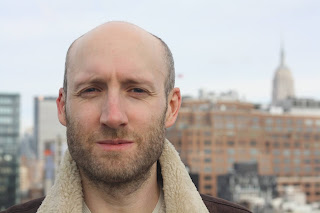


Author Bio from Amazon

Paul Tudor Owen was born in Manchester in 1978, and was educated at the University of Sheffield, the University of Pittsburgh, and the London School of Economics.

He began his career as a local newspaper reporter in north-west London, and currently works at the Guardian, where he spent three years as deputy head of US news at the paper's New York office.
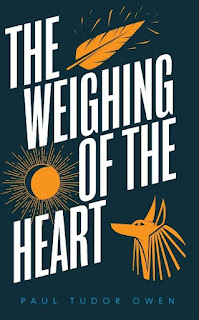


About the book, blurb from Amazon

Following a sudden break-up, Englishman in New York Nick Braeburn takes a room with the elderly Peacock sisters in their lavish Upper East Side apartment, and finds himself increasingly drawn to the priceless piece of Egyptian art on their study wall - and to Lydia, the beautiful Portuguese artist who lives across the roof garden.

But as Nick draws Lydia into a crime he hopes will bring them together, they both begin to unravel, and each find that the other is not quite who they seem.

Paul Tudor Owen's intriguing debut novel brilliantly evokes the New York of Paul Auster and Joseph O'Neill.

Available to buy now, treebook and ebook (kindle is only 99p, Amazon UK, at time of posting.


· Tell us what “The Weighing of the Heart” is about?

The Weighing of the Heart is about a young British guy living in New York called Nick Braeburn, who moves in with a couple of rich older ladies as a lodger in their opulent apartment on the Upper East Side. He gets together with their other tenant, Lydia, who lives next door, and the two of them steal a priceless work of art from the study wall.

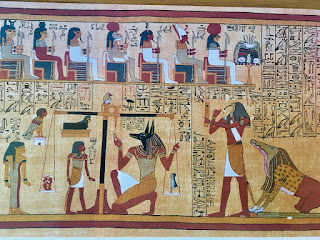
The work of art that Nick and Lydia take is an Ancient Egyptian scene, and as the stress of the theft starts to work on them, the imagery of Ancient Egypt, the imagery in the painting, starts to come to life around them, and it’s intended to be unclear whether this is something that is really happening or whether it’s all in Nick’s head.

· What inspired you to write it?

There were a couple of things that inspired it. The first was New York, where my wife and I lived from 2015 to 2018.


I’d had an obsession with New York since being a teenager. It felt like all these great novels and films and songs I loved were set in New York – The Great Gatsby, Mean Streets, Simon and Garfunkel. It felt like a place where anything could happen, it felt like a great crucible of art and culture where anyone who was anyone either came from or had made their name or had depicted it so memorably.

And that led me to study American literature and American history at university, and the third year was a year abroad, and I went to the University of Pittsburgh, and that was when I was able to visit New York for the first time myself.

And walking those streets, all the unmistakeable iconography of New York around you – the fire escapes, the yellow cabs, steam rising from a manhole, the skyscrapers, the rivers – it just felt like I’d walked into one of those books or films that I’d loved.



And I not only wanted to live there, I wanted to be part of this great tradition of depicting New York and romanticising it. And when we did move there, I’d already written quite a lot of The Weighing of the Heart, so in some ways it really did feel like life imitating art. I was still working on the ending, and I wrote the final chapters in the public library in Soho, round the corner from where David Bowie lived. I used to enjoy walking the same streets that Nick and the other characters in the book would walk, visiting the galleries and restaurants and streets that they visit in the book. There’s a real apartment block on the Upper East Side, just across from Central Park, that I used as the model for the Peacock sisters’ apartment block.

I’d wanted to live there for so long that I did sometimes wonder if this was really happening. I remember when I was a kid watching an episode of Red Dwarf, the sci-fi TV sitcom from the 90s, where the lead character, Lister, gets hooked on this immersive virtual-reality computer game called Better Than Life. And in the game he thinks he is living in Bedford Falls, the town from It’s a Wonderful Life, and he loves it and he doesn’t want to leave. And sometimes after moving to the US I got a bit worried that I was in Better Than Life, that I would wake up and I’d be still a teenager in Manchester reading The Catcher in the Rye, fantasising about New York. The second major source of inspiration came from an exhibition I went to a few years ago at the British Museum called The Ancient Egyptian Book of the Dead, which told the story of what the Ancient Egyptians believed happened to you when you die.

As I learnt from the exhibition, the Ancient Egyptians believed in a ceremony called ‘the weighing of the heart’, something in some ways similar to the Christian idea of St Peter standing at the gates of Heaven, deciding whether or not you have lived a worthy enough life to come in.

In the Ancient Egyptian version, Anubis, the god of embalming, presides over a set of weighing scales, with the heart of the dead person on one side and a feather on the other. If the heart is in balance with the feather, you get to go to the afterlife, which they called the Field of Reeds. But if your heart is heavier than the feather, you get eaten by an appalling monster called the Devourer, who has the head of a crocodile, the body of a lion, and the back legs of a hippopotamus – three of the most dangerous creatures that Ancient Egyptians could encounter. To the Ancient Egyptians, the heart, rather than the brain, was the home of a person’s mind and conscience and memory, which was why it was the heart they were weighing. And, intriguingly, one thing they were afraid of was that the heart would actually try to grass you up during this ceremony – sometimes the heart would speak up and reveal your worst sins to Anubis at this crucial moment. You could prevent this from happening by keeping hold of a little ‘heart scarab’.

I was spellbound by this ornate mythology, which had formed over centuries and millennia; I loved the way it was so familiar in its overall concept but so strange and unfamiliar in its details. And I realised that the painting Nick and Lydia should steal should be an image of this ceremony, the weighing of the heart. It was so fitting, because the book is essentially about guilt and innocence; it’s about you weighing up as a reader how much you trust Nick as a narrator, and it’s about Nick himself and the people around him weighing up how much they trust him, what they think of him, what they know about him and his character. And without spoiling it for anyone who hasn’t read it, I hope that I found a way to knit all that imagery into the book effectively, especially towards the end.

Once I’d settled on this, there were a number of strange coincidences. At one point in The Weighing of the Heart Nick recalls a school trip to the British Museum, and it is suggested he might have stolen one of these heart scarabs that could protect you during the ceremony. I had written this scene but I wanted to get the details right, so I looked through the British Museum’s collection of scarabs on their website and identified the one that best fit the bill, and then I went down to the museum to take a look at it in person.

But when I got there and found the case where this scarab was supposed to be, the space for this scarab was empty. Instead of the object itself there was just a note on the wall that said: ‘Heart scarab (lost).’


It was another strange moment of life imitating art.

· How long did it take?

I think I started the book around 2011, and once I’d written the first couple of chapters I quickly felt quite confident that what I was writing was much better than anything that I’d written before. I had found an agent after working on a previous book that never found a publisher – looking back at it now it wasn’t up to scratch. So I went to him with the beginning of The Weighing of the Heart, but because of the failure of the first book, he seemed to have more or less lost interest. So I was faced with a choice. You’re usually told as an author – especially when you’re starting out – that you will never get anywhere without an agent, and that if you have managed to get one you should do everything you can to keep them. I’m sure there is a lot of truth in that. But I felt that if I stayed with this agent, that was not going to result in this book getting published. So I amicably cut ties with him and set about trying to find someone new. And luckily that turned out to be a much easier process than it had been in my early 20s.

In those days agents had all expected manuscripts to be delivered by post, and I remember every weekend printing out page after page of my chapters, stapling these bundles together, taking them to the post office... It was very time-consuming. But by the time I came to find a new agent, the world of agents had finally discovered email, and that vastly simplified the whole system. I finished work one day and went to a secluded spot in the office, and started working my way from A to Z through The Writers’ and Artists’ Yearbook, which lists all the agents in the UK, sending out my first two chapters to as many agents as I could. I think that first night I got about half way through the alphabet, to about M, and by the next morning, or the morning after that, I was already getting some interest, which was really heartening.

And I eventually started working with a brilliant agent called Maggie Hanbury, who I’m still working with now, and I finished a workable draft of The Weighing of the Heart and we started sending it out. But at that point I had a stroke of bad luck. Another book about art theft in New York – The Goldfinch by Donna Tartt – had just come out, and it was a massive hit. It was everywhere. Again and again I heard from publishers: “We really like your book, but it’s just too similar to The Goldfinch.” Tartt’s debut novel, The Secret History, was a big influence on me, especially in its tone and pace, and I actually remember reading the news that she had a new book out on my phone on the way to work one day – a book set in New York, all about the theft of a painting. I distinctly remember thinking: “Oh no, that sounds very similar to my idea. I hope that doesn’t make things difficult for me.”

And then I moved to New York and started a new job and life became extremely busy and complicated, and I don’t do any work on my novel or on trying to get it published for the next year or so. When things started to settle down a bit, I went back to my agent, but she said she didn’t feel that she could send it out to anyone else because a number of publishers had turned it down already. So again I was faced with a choice. I could just leave the manuscript in my metaphorical desk drawer and get on with something else. But I knew that it was a good book and it felt frustrating that it was sitting there, unread. So I decided to send it out to small publishers myself. And again I went through the Writers’ and Artists’ Yearbook and the US equivalent, Writers’ Market, starting at A and sending out the first two chapters to as many publishers as I could. And the response was very positive. The received wisdom in the literary world is that publishers will only talk to you if you’ve gone through an agent, and that may well be true for the big publishing houses. But many smaller presses seemed happy to consider my book without an agent being involved.

I had a really productive discussion with Obliterati Press, a small publishing house in the UK set up by two writers whose whole purpose is to get books out there that they feel enthusiastic about, which otherwise might not see the light of day. They agreed to publish it, and it was a great process working with them. Signing my publication deal ended up roughly coinciding with our return to London from New York – and it felt very exciting to be coming back to the UK ready to achieve this ambition that I had been working towards for so long.

· What was the research like for it?

The main area of research was Ancient Egypt, which I really enjoyed diving into. I’m very far from an expert but I hope I managed to learn enough to make the theme work in the book. I’m still fascinated by it. Just before the lockdown started, I went to see the Tutankhamun exhibition at the Saatchi Gallery here in London with my wife and my parents. It was incredible to put yourself in the position of Howard Carter peering into the tomb in 1922. “Can you see anything?” he was asked. “Yes, wonderful things.”

· Art, Egyptian mythology and mental health are 3 of the main themes in the book, what drew you to writing them?

I always take a lot of inspiration from art and museum exhibitions. One of the things I loved when I first moved to London was discovering all the fantastic art galleries here – I remember some amazing exhibitions that really had a big influence on me: Edward Hopper at Tate Modern, Bridget Riley at the National Gallery. I remember a Picasso exhibition a few years ago which explored everyone he’d influenced: the Cubists, Francis Bacon, Henry Moore. It felt like he would invent a style, artists would flood in to imitate it, and then Picasso would just move on. I love that sense of creative restlessness. One of my first jobs at the Guardian was to summarise arts reviews, and that was my education in art – I knew very little about it before that.

The mental health theme was the aspect that worried me the most when the book came out. My presentation of Nick’s mental breakdown is not based on expertise at all – I really just tried to put myself in his position and tried to realistically depict how he might react. The response from readers with more experience than me of mental health problems might have been very critical. But so far it doesn’t seem to have been received badly, so I’m relieved about that.

· Do you think you will revisit the character(s) again?

I don’t think so. The way I think about characters, they exist to fulfil a function in the book, to help express an idea or a theme. So once that has been achieved (hopefully) at the end of the book, they don’t really exist any more. But you never know. If I had an idea that could only be expressed by using an older version of Nick or Lydia, then suddenly it might make sense to revisit them.

· What are you working on now?

I’m currently working on a new novel, which is essentially about this current phenomenon of lack of trust in the media, in authority, fake news, conspiracy theories. It’s set in New York again but it’s going to be set in the 1970s when New York was a sort of crime-plagued hellhole. That that was the kind of New York that I first fell in love with as a kid through films like Taxi Driver and Mean Streets. To me that was a time when New York felt so exciting but also so gritty and I really wanted to sort of conjure up that New York in my writing. It’s about a failing newspaper journalist who starts looking into conspiracy theories about the moon landings and he starts meeting these conspiracy theorists who believe the moon landings were faked. And as he gets drawn into deeper into the world he sort of finds himself against his better judgment starting to believe some of their paranoia. Unfortunately I’ve just missed the 50th anniversary of the moon landings, but hopefully I’ll have it finished in time for the 60th.

· What is next for Paul Tudor Owen?

My wife is just about to have a baby, so that’s going to be the main item on my agenda for quite a while, I think! · Where can fans find you?

My website: https://paul-tudor-owen.tumblr.com/

Instagram: @paultowen (https://www.instagram.com/paultowen/)

Twitter: @paultowen (https://twitter.com/PaulTOwen)

Facebook: https://www.facebook.com/PaulTudorOwen

Amazon: https://www.amazon.co.uk/Weighing-Heart-Paul-Tudor-Owen/dp/1999752848

Paul Tudor Owen’s debut novel The Weighing of the Heart is published by Obliterati Press and has been shortlisted for the People’s Book Prize 2020 and longlisted for the Not the Booker Prize 2019

a Rafflecopter giveaway


AND if the interview isn't spoiling you enough I am running a giveaway for x1 ebook copy of the book. UK only guys as Amazon won't allow me to gift outside my own country. Good luck if entering xxx

a Rafflecopter giveaway

Saturday, 14 September 2019

Q&A with author Paul Burston

Q&A with author Paul Burston


Photo by Krystyna FitzGerald-Morris


• The book I hear is based on something you experienced yourself, is that true and if so what happened?

Yes, it’s true. Several years ago, I had a cyberstalker who made my life hell. It started with emails and trolling on Twitter, then spilled over onto various websites where I was employed as a journalist or featured as an author. It was mostly homophobic abuse. At its worst, I was receiving dozens of malicious communications every day. The stalker also contacted people who employed or supported me in some way, trying to persuade them to drop me. Then they started buying tickets for my events, posting the booking info on Twitter and making veiled threats to come and sort me out. Eventually I went to the police, who were very understanding. The scene in the book where Tom reports Evie to the police is pretty much as I remember it. I then helped the detective to build a case by taking screenshots of everything and making numerous police statements. Basically, you have to relive the abuse over and over again. Eventually the woman responsible was arrested and tried, found guilty and given a suspended sentence and a restraining order. I never heard from them again but the after effects of the harassment lasted for months.

• How did you get over something like that?

With time and support - from my partner, my GP, friends and victim support. I had counselling and was also prescribed anti depressants. I wasn’t in a good way! I was very angry, not just with the woman responsible but also with myself for letting it get to me. Of course I realise now that I was wrong to feel that way. Harassment or stalking is seriously disruptive and unsettling. I was diagnosed with PTSD. I wanted to communicate some of that in the book. The impact of what happened to me still lingers, but in a more positive way. I changed my online behaviour. I’m far more discerning about what I share on social media now.

• How did you find writing the book when it is something so close to something you experienced?

It was very therapeutic. I often mine my own life experiences for my fiction, so I knew I’d write about it at some point. The idea for the book really seeded itself when I moved into crime fiction a few years ago. I knew it would make a good story. It was a story I had a specific insight into.

• The characters, well the main male and female, are not the nicest by any means how did you come up with them?

They’re partly based on various people or character types I’ve encountered over the years. I also put a bit of myself into each character I write - in this case, my less admirable qualities! I’m not really interested in nice characters. They’re not as much fun to write. I’m far more interested in characters who are compelling or damaged in some way. They’re more of a challenge.

• The female character, her voice was so authentic was that hard to create?

I found writing her the most enjoyable. I wanted the story to be more ambiguous than it was in real life, and for her character to be more sympathetic than the person who inspired her. Once I had her voice, writing her came quite easily. I’d hear her whispering in my head, sit down and write.

• Who was more fun, Evie or Tom?

Evie, for lots of reasons. She’s clearly damaged, obsessive and relentless but also very witty and well read. Her pop cultural references were great fun to write, too - Morrissey, obviously, but also Blondie, Bowie and Madonna. I’ve interviewed Debbie Harry and I met David Bowie. I’ve gone off Morrissey but I’m still a big Madonna fan. She’s a great pop star. So Evie and I have a few things in common.

• What is next for Paul Burston?

I’m working on my next book. It’s another psychological thriller, also set in Hastings, and revolves around a man seeking revenge for things that happened to him in the past. It’s more of a family drama than the current book. I’m also touring with my literary salon Polari and preparing for our Polari Book Prize event with Tracey Thorn in October and our twelfth birthday event with Russell T Davies in November, both at the Southbank Centre.

• Where can fans find you? (dare I ask that after reading “The Closer I Get”

My website has information about upcoming author events and Polari events. www.paulburston.com

I’m also on Twitter @PaulBurston, Insta @paulburston1 and Facebook @paulburstonauthor

• Anything else you would like to add/answer that I haven’t asked?

I’d like to encourage your readers to please support local bookshops and libraries! They do so much for authors.

About the book, My Review, Blurb from Goodreads


Tom is a successful author, but he’s struggling to finish his novel. His main distraction is an online admirer, Evie, who simply won’t leave him alone. Evie is smart, well read and unstable; she lives with her father and her social-media friendships are not only her escape, but everything she has. When she’s hit with a restraining order, her world is turned upside down, and Tom is free to live his life again, to concentrate on writing. But things aren’t really adding up. For Tom is distracted but also addicted to his online relationships, and when they take a darker, more menacing turn, he feels powerless to change things. Because maybe he needs Evie more than he’s letting on. A compulsive, disturbingly relevant, twisty and powerful psychological thriller, The Closer I Get is also a searing commentary on the fragility and insincerity of online relationships, and the danger that can lurk just one ‘like’ away…


And if I haven't spoiled you enough with the interview I have a wee giveaway of the book. x1 ebook, UK ONLY, sorry guys but Amazon doesn't allow me to gift outside my own country. To be in with a chance just fill in the Rafflecopter below, good luck.

a Rafflecopter giveaway


Thursday, 1 August 2019

Q and A with author Noelle Holten


Squeeeeeeeels - Welcome the beautiful Noelle to So Many Books, So Little Time. Noelle is a crime book blogger and champion supporter of authors and bloggers and has now joined ranks with authors having written her first book "Dead Inside".


Tell us what it has been like for you going from Noelle the book blogger to Noelle the author.

It still feels very much unreal, if I am honest. I haven’t yet mastered telling people that I am an author/writer at events and prefer to hide behind the comfort of the book blogging. I hate talking about myself, so this makes it easier. I guess I will need to change that!

Did you know you would always write a book?

Not at all. I’ve always had an interest in writing – short stories and depressing poetry (lol) in my teens mainly, but never believed I could actually write a book. I attended Graham Smith’s Crime and Publishment in 2017 with only the prologue for what is now Dead Inside written. I received some very positive feedback, support and inspiration – so much so, that once I left the course I wrote Dead Inside in under 12 weeks. Well, the first VERY ROUGH draft! I never dreamed that even if I did write a book, anyone would be interested in publishing it, but they were and for that I am grateful!

Where did the inspiration come from for the story?

Having been a Senior Probation Officer for 18 years and working in a multi-agency team, as well as being in an abusive relationship for nearly 13 years – I drew my inspiration (though seems weird saying that) from my own experiences of that. I have a vast knowledge of the criminal justice system and have worked with so many amazing agencies, I wanted to show that there is more to solving a crime than just the police investigation, as well as highlight the seriousness of domestic abuse, those affected and that your life CAN change.

We recognise a lot of the names in the book, was it easier or harder writing characters named after real people?

I didn’t find it difficult as they were just the names used. Everything else was fictional in terms of the characters – I am not writing about the people themselves. I chose them because they helped me through some very dark times and I wanted to pay them back, as a ‘thank you’ just didn’t seem like enough. Now they will live forever in the pages of my books!

Tell us about your writing process, do you have a set ritual every day or does it vary?

I write for one hour a day, every day - after work or in the afternoons on a weekend. I usually get 1000 to 1200 words in that hour. This then leaves me time to do other things, like reading and blogging, or catching up on a Netflix series! I don’t stray from this at all unless I am away somewhere, but even then, I have a notebook and I am constantly writing down ideas, or chapters to include. It keeps me motivated and my mind focused on the story I am writing.

How has life changed for you going from blogger to author?

I’m not sure that it has, is that weird? I still feel the same, people generally recognise me for my blog rather than as a writer -LOL – the only real difference has been that I have had to cut down on my blog/taking on new review requests as I need to focus on writing and promoting my book(s). I’m still the same inappropriate, weird, author-stalking Noelle you all know!

Have you noticed a change in how people behave/engage/communicate with you?

I’ve come across and met some new people online – and I have to make sure to thank them and everyone who has taken the time to read and review Dead Inside - the response has been amazing and overwhelming. But I think perhaps because I haven’t changed, people still engage with me the same way and I respond the same way. I’m still just me…

What are you working on now? (do you see a lot of books in this series or may you branch into new series?)

I am currently writing the third book in the DC Maggie Jamieson series – whilst I wait for the second round of edits on the second book in the series. I have quite a few ideas for the series so as long as I am asked to keep writing them, I will. I do have some exciting news, but I can’t share it yet….Eeeeeek! One day I would also love to try my hand at a psychological thriller, but that is a whole different writing skill, in my opinion, so I need to get a grasp of that first before I try.

What has been the biggest/happiest experience so far?

EVERYTHING! There have been so many! Having my book ACTUALLY published! Being invited to and appearing on panels, having so much support from fellow writers and the amazing blogging community. New readers enjoying my book. Quotes from some AMAZING authors I have been a fan of for years! But one thing I will say, having my sister read it and message me that she LOVED it. My sister doesn’t hold back, so that is HIGH praise and made me cry a few happy tears!

Where can folk find you?

Twitter: (@nholten40) https://twitter.com/nholten40
Facebook: https://www.facebook.com/noelleholtenauthor/
Blog FB page: https://www.facebook.com/crimebookjunkie/
Instagram: @crimebookjunkie
Anything else you would like to ask I may have missed?

I just wanted to thank you so much for having me on your blog and to once again thank everyone who has read and reviewed Dead Inside. It means the world to me.


About the book

When three domestic abuse offenders are found beaten to death, DC Maggie Jamieson knows she is facing her toughest case yet.

The police suspect that Probation Officer Lucy Sherwood – who is connected to all three victims – is hiding a dark secret. Then a fourth domestic abuser is brutally murdered. And he is Lucy’s husband.

Now the finger of suspicion points at Lucy and the police are running out of time. Can Maggie and her team solve the murders before another person dies? And is Lucy really a cold-blooded killer?

And if a Q&A with this lovely wee chop isn't spoiling you enough I am also having a wee giveaway, x1 ebook of Dead Inside. Sadly Amazon will only allow me to gift within my own country so it is UK ONLY. If you are the winner you just need to give me your email and Amazon will send the ebook directly. To be in with a chance of winning just use the Rafflecopter below, the more entries you complete the more times your name goes into the draw. Good luck, Happy August and thanks again so much to Noelle for taking time out of her busy schedule to gab with us, you are a star!

a Rafflecopter giveaway

Tuesday, 2 April 2019

Q&A with the fabulous Alex Kane

Happy April you guys, so sorry this is my first post, been working and trying to catch up on blog stuff all day!


Welcome Alex Kane to the blog, Alex has very kindly taken some time out to answer some questions and chat about her new book "No Looking Back" previously released as "Chasing the Traveller".


Tell us about your journey so far as an author

It has been brilliant. I have been writing for around ten years now and have written a few books under my own name, Emma Clapperton. I dabbled in self-publishing for a few years and it worked well for me, however I really wanted to have the backing of a publisher so I continued submitting and found a home for my supernatural thrillers. As time went on, I wanted to try something a bit different so I went on to write a standalone back in 2016, which was signed under a big Scottish publisher, but sadly the company went into liquidation so I self-published Chasing the Traveller, which has now been re-edited and released by Hera Books as NO LOOKING BACK.

Lets talk about the new book, what is it about?

Kat Denton has been in a loveless, abusive marriage with Jimmy and decides it’s time to leave. She escapes with her sister in law, Ellie and then discovers she is pregnant. The women go on a journey of recovery and although they are rebuilding their lives, both fear that they will always be looking over their shoulders. Kat’s journey however, leads her to discover more than she could have imagined and the horror which she faces leads her back to the very man she fled from.

What inspired this story?

I wanted to write about strong women and give women a voice within the scenario I have written about. Coercive control within a relationship is being highlighted all over the place right now and I wanted to highlight it within my writing. Women (and men) in these types of relationships can suffer in silence for years, where even the people closest to them don’t know what is happening to them. I also wanted to set the book somewhere unusual and I have always found the travelling community highly interesting.

What research did you have to do for the book?

I used to work with a girl who lived within the travelling community and she was on hand for any questions I had and helped to make it as authentic as possible. I also researched women’s refuges, help for people in relationships of domestic abuse and tried to be as sensitive as I could for anyone reading the book who has been in similar circumstances. I was also careful to highlight that the travelling community does not mean all relationships are typically negative.

What are you working on now?

I am working on the edits for my next Hera Books title, WHAT SHE DID. Hera will release information on that in due course…

Will you be touring, doing any shop or online chats?

I am on all social media platforms and am always posting as well as joining in with other bookish chat. I don’t have any tours planned as such, other than the blog tour for the release. However I am happy to chat to anyone who has any questions at any time.

Do you have any quirks, must do's, writing rituals?

I do always have to have a fresh cuppa next to my laptop when I am writing. I do have a bad habit of typing a few hundred words then accidently finding myself on Facebook or Instagram. I also like to listen to certain types of music when writing particular scenes to help me to set the scene in my head.

What advise would you give to fellow authors or anyone wanting to write a book?

When you have an idea in your head, run with it. Plan if you’re a planner or just write if you’re not. And don’t give up.

Where can fans find you?

Facebook @alexkanewriter
Instagram @alexkanewriter
Twitter @AlexKaneWriter


Anything you would like to answer I haven't asked?


Apart from books, I am obsessed with skull ornaments and art, so if anyone has any chat regarding the human head, I’m all ears

And if that isn't enough to spoil you guys I am doing a giveaway of x1 ebook copy of "No Looking Back" - to be eligible to win you must have an Amazon UK account as I can't gift outside my own country, sorry loveys. As always just use the Rafflecopter below to enter.


a Rafflecopter giveaway

Friday, 15 March 2019

Q&A with author Douglas Skelton

Welcoming Douglas Skelton to So Many Books, So Little Time. Thanks for taking time out to chat today us especially with this week being the launch of Thunder Bay, Skelton's newest creation. Available to buy NOW, here is the link to Amazon available in tree book and ebook format.


Tell us about your newest book "Thunder Bay"

Thunder Bay sees weekly newspaper reporter Rebecca Connolly defy her editor’s orders to visit the island of Stoirm. Roddie Drummond, a man cleared fifteen years before on a Not Proven verdict for the murder of his partner Mhairi Sinclair, is returning for the funeral of his mother. His return will stir up old passions and memories. Rebecca has a personal reason for visiting the island – her father was born there but refused ever to speak about it or his family. She wants to know why.


Is the Island & Thunder Bay based on a real place and if not what inspired its creation. If it is what made you choose that one to write about?

It’s completely fictional, although I’ve used elements not just of other islands I’ve visited but also the mainland. I wanted to control the history and the mythology, both of which play a part in the story, and the idea of characters being cut off – by the water, by the weather – is something many writers are attracted to in order to make the stories more claustrophobic.


This was my first book of yours, is this a good place to start or would you rather new readers start with another of your titles, if so which and why?

New readers can certainly start with THUNDER BAY as it’s planned as the first in a new series. There are four Davie McCall books – gritty, Glasgow crime – beginning with BLOOD CITY. The two Dominic Queste books, the first is THE DEAD DON’T BOOGIE, are lighter but still thrillers, while THE JANUS RUN is a stand alone chase thriller set in New York.


I personally loved the wee legends/myths you put in the story, are any of them based on truth and why did you choose to include them?

All the legends are based on stories from across Scotland. The witches of the mountain, the petrified sisters, the water horse are all fairly common themes on Scottish folklore. The mountain on Stoirm is actually based on Schiehallion in Perthshire.


What research did you carry out for the book, if you can share without spoilers

I suppose the research was carried out over a number of years of visiting islands and reading about history and folklore. There was a bit of reading about vegetation in the Hebrides. The rest was made up!


The book has more than one timeline, going past to present and back and forth did you know this was what you wanted when penning it?

I always knew I would move back and forward between the present and the events of fifteen years before. I don’t plan my books in any way but as it gestated in my mind – and it’s been there for some considerable time – I knew that would be the structure I would follow.


Is it easier to write in one timeline or both? Which do you prefer?

Each one was difficult! This book is a departure from my usual style. In the past I’ve followed the Raymond Chandler suggestion of having two guys kick the door in with guns in their hand. This story did not lend itself to that, so it was a more challenging write for me.


How do you keep track of so many threads of stories and characters?

Often with difficulty! As I said, I don’t plan but I will make notes on bits of paper, which are strewn across my desk. I really should be more organised. I might get on better!


What is next for Douglas Skelton? Are you writing or thinking about your next book?

The process has begun on the next one. I have a title and a plot. Unusually I even have an ending! For me that’s a silver lining. All I need to do now is write it. Every silver lining has a cloud.


Where can fans connect with you?

I’m on Twitter @Douglasskelton1 and my website www.douglasskelton.com


Thanks so much Douglas, here is to smashing it to no.1 - If you haven't been spoiled enough by the Q&A I am offering my pre loved copy of the book. To be in with a chance of winning just use the Rafflecopter below to enter, the more entries you complete the more times your name goes in.


a Rafflecopter giveaway


Saturday, 19 January 2019

10-33 Assist PC by author Desmond P Ryan - Blog Tour

Today is my stop and closing the tour for Bakers Blog Tours and Promotions. I am re posting as my post went live earlier than it should have. So if you missed it you can now read my Q&A with author Desmond P Ryan. Please check out the previous stops on the blog tour!


Where can you find Desmond? Facebook Twitter and his website you can read more about him and purchase his books.


What sparked the idea for the book?

10-33 Assist PC was originally written as a prequel to Death Before Coffee (which is now the second novel in the series, available on February 8). When my wife was reading and editing Death Before Coffee, she suggested that there was a huge backstory that had to be told. She thought a short novella would suffice, but, once I got started, the characters just kind of ran off on me.


Do the characters come from real life people or completely made up?

All of the characters in 10-33 Assist PC are composites of the women and men that I have come across over my twenty-eight years in policing. One of the great things about writing from experience is that there are no shortages of characters to draw from!


The seed eating partner, the shells getting everywhere, was this drawn from personal experience as it rang very true?

THAT is absolutely and one hundred percent true! Back in the day, everyone, it seemed, chewed those damned sunflower seeds. And spit them EVERYWHERE! I’ve had readers tell me about guys they play hockey with now who spit the seeds all over the changerooms, so it’s not just a cop thing. And it still happens, apparently.
Scout car floormats covered with sunflower seed shells and old hubcaps used as ashtrays in the Criminal Investigation Bureau offices overflowing with cigarette butts are visions that are burned in my brain.


There is A LOT of swearing in the book, particularly from one character, do you think it would have worked with less. What makes that character more sweary than the others?

The swearing. Yes. I know. My mother commented about that, too. But there was a reason for it. Swearing is the language of the streets and anyone working on the streets picks it up pretty quickly. As a result, it is very much, in my experience, part of the police culture. I think to have censored the language would have taken away from the authenticity of the dialogue (sorry, Mom).

With regards to that one particular character—he’s pretty immature and struggles to express himself and/or assert his masculinity. As a result, he falls back on foul language to try to prove himself. The other characters express themselves (and their struggles) differently. Julia Vendramini, for example, is known for not swearing (although I suspect she drops a few loaded phrases under her breath in Italian).


There is a part of the book that is very brutal and graphic, without spoilers, if able, what made you decide to put such a scene in the book?

That scene was very difficult to write, both in terms of describing what was happening, and delivering the emotional impact it had on the characters. I found it very emotionally challenging to write because of my own experiences. Having so said, I felt it was important to include the scene and write it as such to give the reader as realistic an experience as possible. I don’t think it was gratuitous in terms of the graphic nature of it. I wanted the reader to experience what actually happens in those situations. I think we are so desensitized to violence in general because it has been glossed over and/or glorified and I didn’t want to do that. I wanted the reader to feel, smell, taste what violence is by writing it the way it actually looks and feels. Many readers responded strongly to that scene and, as a result, I ended up writing a novella, The Funeral, that was very difficult to write, but has been exceptionally well-received.


The book has a few layers to it, between the cops relationships, working aspect, criminals, PTSD – was this your aim from the start or did some of it surprise you?

One of the great things about crime fiction is that it provides an easy platform to discuss social issues. When I began 10-33 Assist PC, I had a fairly clear idea of the topics I wanted to tackle and how those would have to be layered. For example, I wanted to discuss the challenges women in policing have, which is why I specifically wrote D/C Amanda Black the way I did (NOT-SO-SPOILER ALERT: Amanda Black becomes a very significant character as the series continues). PTSD is another big issue that I had to discuss. It is pretty much a side-note in 10-33 Assist PC but, just as in real life, gets bigger as the characters progress through their careers. I also wanted to give the characters depth. They are (not really) more than just words on a page. They are multi-dimensional, and, like us, have a lot to them. And, as you’ve suggested, some of the layers did kind of surprise me as the characters began developing on their own. Mary-Margaret O’Shea, Mike’s mother, for example, became much more than I had intended. In fact, in The Funeral, she begins to steal some thunder. In Death Before Coffee, she steals quite a bit of thunder and, by the time we see her again in Man At The Door (available October 2019), she is practically running away with the novel. As a result, I’ve had to give her her own cozy series that will be available in 2020 just to keep on track with the Mike O’Shea series. THAT was a surprise!


This is a good foundation book, do you envision this as a long series?

Thank you. I’m glad you enjoyed 10-33 Assist PC. And yes, this is the foundation for the Mike O’Shea Crime Fiction series. I am anticipating it to be a six-book series, although I’ve mucked that up already by writing The Funeral (although I’m cutting myself some slack on that one by saying it’s just a novella!).
I’ve got the next two books set to go, with the fourth in draft and the fifth and sixth in a stack of cue-cards in my drawer. I don’t know that I‘d want to stretch the series out beyond that. I think readers might get bored with it. Or I might. And that’s not a good way to end anything.
Instead, I’ve got two spin-offs with a possible third series in the works.


What are you currently working on?

Right now, I’m madly doing final edits for Death Before Coffee (which will be available in a couple of weeks) and Man At The Door (available in October). From there, I’m going to jump right into the fourth book (title pending) and get the first two Mary Margaret Cozy Series books off to my editor.

If 10-33 was made into a movie, who would you see playing the main characters?

You know, I find that question so difficult because I don’t want to take away from the reader experience of how they see the characters by giving my vision of what those characters may look like. Actually, if you don’t mind, I’m going to pass on answering this one.

What is next for Desmond?

Well, as I’ve mentioned, I’ve got a few more books in the Mike O’Shea Crime Fiction series in the works, as well as the Mary-Margaret Cozy Series, the latter of which I’m quite looking forward to watching develop.
I’m also interested in turning the Mike O’Shea Crime Fiction series into audiobooks. I don’t know about you, but I love audiobooks. Commuting takes up so much time here in Toronto that the only way to make it doable (in my opinion) is by listening to a book while you sit in traffic. I’m very curious to see how to make that happen in the next few months for 10-33 Assist PC.
I’ve also got an idea for a noir series based on Detective Sergeant Robby Williams. In Death Before Coffee, the next book in the Mike O’Shea Crime Fiction series, we see Robby again. Given that Death Before Coffee takes place more than a decade after 10-33 Assist PC, Robby has had a lot of time to unravel, and a very dark series devoted to that experience might be kind of fun. I’ve got the first draft of the first book done for it, so it’s just a matter of going from there.
My editor also suggested that I might like to do a series based on Amanda Black, but we shall see. In the meantime, I’ve got a dozen or so appearances on author panels and at crime conferences scheduled for the first half of 2019 and am really looking forward to seeing what other opportunities present themselves as the year unfolds.


The book is out to buy just now, ebook and treebook format, CLICK HERE to go to Amazon.


Wednesday, 16 January 2019

10-33 Assist PC by Desmond P Ryan Blog Tour


Today is my stop and closing the tour for Bakers Blog Tours and Promotions, I have a Q&A with author Desmond P Ryan of book 10-33 Assist PC. Please check out the other stops on the blog tour!


What sparked the idea for the book?

10-33 Assist PC was originally written as a prequel to Death Before Coffee (which is now the second novel in the series, available on February 8). When my wife was reading and editing Death Before Coffee, she suggested that there was a huge backstory that had to be told. She thought a short novella would suffice, but, once I got started, the characters just kind of ran off on me.


Do the characters come from real life people or completely made up?

All of the characters in 10-33 Assist PC are composites of the women and men that I have come across over my twenty-eight years in policing. One of the great things about writing from experience is that there are no shortages of characters to draw from!


The seed eating partner, the shells getting everywhere, was this drawn from personal experience as it rang very true?

THAT is absolutely and one hundred percent true! Back in the day, everyone, it seemed, chewed those damned sunflower seeds. And spit them EVERYWHERE! I’ve had readers tell me about guys they play hockey with now who spit the seeds all over the changerooms, so it’s not just a cop thing. And it still happens, apparently.
Scout car floormats covered with sunflower seed shells and old hubcaps used as ashtrays in the Criminal Investigation Bureau offices overflowing with cigarette butts are visions that are burned in my brain.


There is A LOT of swearing in the book, particularly from one character, do you think it would have worked with less. What makes that character more sweary than the others?

The swearing. Yes. I know. My mother commented about that, too. But there was a reason for it. Swearing is the language of the streets and anyone working on the streets picks it up pretty quickly. As a result, it is very much, in my experience, part of the police culture. I think to have censored the language would have taken away from the authenticity of the dialogue (sorry, Mom).

With regards to that one particular character—he’s pretty immature and struggles to express himself and/or assert his masculinity. As a result, he falls back on foul language to try to prove himself. The other characters express themselves (and their struggles) differently. Julia Vendramini, for example, is known for not swearing (although I suspect she drops a few loaded phrases under her breath in Italian).


There is a part of the book that is very brutal and graphic, without spoilers, if able, what made you decide to put such a scene in the book?

That scene was very difficult to write, both in terms of describing what was happening, and delivering the emotional impact it had on the characters. I found it very emotionally challenging to write because of my own experiences. Having so said, I felt it was important to include the scene and write it as such to give the reader as realistic an experience as possible. I don’t think it was gratuitous in terms of the graphic nature of it. I wanted the reader to experience what actually happens in those situations. I think we are so desensitized to violence in general because it has been glossed over and/or glorified and I didn’t want to do that. I wanted the reader to feel, smell, taste what violence is by writing it the way it actually looks and feels. Many readers responded strongly to that scene and, as a result, I ended up writing a novella, The Funeral, that was very difficult to write, but has been exceptionally well-received.


The book has a few layers to it, between the cops relationships, working aspect, criminals, PTSD – was this your aim from the start or did some of it surprise you?

One of the great things about crime fiction is that it provides an easy platform to discuss social issues. When I began 10-33 Assist PC, I had a fairly clear idea of the topics I wanted to tackle and how those would have to be layered. For example, I wanted to discuss the challenges women in policing have, which is why I specifically wrote D/C Amanda Black the way I did (NOT-SO-SPOILER ALERT: Amanda Black becomes a very significant character as the series continues). PTSD is another big issue that I had to discuss. It is pretty much a side-note in 10-33 Assist PC but, just as in real life, gets bigger as the characters progress through their careers. I also wanted to give the characters depth. They are (not really) more than just words on a page. They are multi-dimensional, and, like us, have a lot to them. And, as you’ve suggested, some of the layers did kind of surprise me as the characters began developing on their own. Mary-Margaret O’Shea, Mike’s mother, for example, became much more than I had intended. In fact, in The Funeral, she begins to steal some thunder. In Death Before Coffee, she steals quite a bit of thunder and, by the time we see her again in Man At The Door (available October 2019), she is practically running away with the novel. As a result, I’ve had to give her her own cozy series that will be available in 2020 just to keep on track with the Mike O’Shea series. THAT was a surprise!


This is a good foundation book, do you envision this as a long series?

Thank you. I’m glad you enjoyed 10-33 Assist PC. And yes, this is the foundation for the Mike O’Shea Crime Fiction series. I am anticipating it to be a six-book series, although I’ve mucked that up already by writing The Funeral (although I’m cutting myself some slack on that one by saying it’s just a novella!).
I’ve got the next two books set to go, with the fourth in draft and the fifth and sixth in a stack of cue-cards in my drawer. I don’t know that I‘d want to stretch the series out beyond that. I think readers might get bored with it. Or I might. And that’s not a good way to end anything.
Instead, I’ve got two spin-offs with a possible third series in the works.


What are you currently working on?

Right now, I’m madly doing final edits for Death Before Coffee (which will be available in a couple of weeks) and Man At The Door (available in October). From there, I’m going to jump right into the fourth book (title pending) and get the first two Mary Margaret Cozy Series books off to my editor.

If 10-33 was made into a movie, who would you see playing the main characters?

You know, I find that question so difficult because I don’t want to take away from the reader experience of how they see the characters by giving my vision of what those characters may look like. Actually, if you don’t mind, I’m going to pass on answering this one.

What is next for Desmond?

Well, as I’ve mentioned, I’ve got a few more books in the Mike O’Shea Crime Fiction series in the works, as well as the Mary-Margaret Cozy Series, the latter of which I’m quite looking forward to watching develop.
I’m also interested in turning the Mike O’Shea Crime Fiction series into audiobooks. I don’t know about you, but I love audiobooks. Commuting takes up so much time here in Toronto that the only way to make it doable (in my opinion) is by listening to a book while you sit in traffic. I’m very curious to see how to make that happen in the next few months for 10-33 Assist PC.
I’ve also got an idea for a noir series based on Detective Sergeant Robby Williams. In Death Before Coffee, the next book in the Mike O’Shea Crime Fiction series, we see Robby again. Given that Death Before Coffee takes place more than a decade after 10-33 Assist PC, Robby has had a lot of time to unravel, and a very dark series devoted to that experience might be kind of fun. I’ve got the first draft of the first book done for it, so it’s just a matter of going from there.
My editor also suggested that I might like to do a series based on Amanda Black, but we shall see. In the meantime, I’ve got a dozen or so appearances on author panels and at crime conferences scheduled for the first half of 2019 and am really looking forward to seeing what other opportunities present themselves as the year unfolds.


The book is out to buy just now, ebook and treebook format, CLICK HERE to go to Amazon.


Friday, 19 October 2018

Celebrating Publication Day with Angela Marsons


Book 9 is out today to buy, grab yours HERE

Thanks so much for taking some time out to answer questions for us, the Crime Book Club family are very excited and a few also wanted some questions popped in.


As you know I am new to the series this year, despite the CBC members raving about them for so long. I LOVE DI Kim Stone, she is such a loyal character, a true copper who is the victims voice. How did it come about creating her and getting into actually writing them?

I spent many years writing books I thought editors would like. They were all character driven emotional stories which I loved writing but I’ve always loved reading crime. I never thought I could write a crime book so I kind of sat down with the intention of writing the book I wanted to with the character who was in my head based in an area I know well. I totally expected to hit a wall due to plotting issues but as soon as I gave Kim Stone a voice she ran away with my pencil. No-one was more surprised than me when I realised I had finished the book and Silent Scream had been born.


Is Kim Stone based on anyone?

She isn’t based on anyone but her voice had been in my head for many years. I didn’t let her out as she didn’t sound all that likeable in my head so I thought well if I don’t like her, no-one will. It wasn’t until I started writing about her in Silent Scream that I realised she had many good points too and although not the most socially adept person she was passionate and driven to fight for the underdog.


As a Tolkien fan I squealed when I read “that” line, just how big a fan are you and will we see any other references?

I do love the films but what I loved more was the inference that such a dark, desolate land was based on the Black Country. It really helped me to give people the tone and atmosphere that I wanted to portray in the books.


How did it feel getting your first book published and how does it compare to getting a book published now, years later?

Ooooh, this is a great question. I don’t think anything compares to that first experience of fear mixed with excitement mixed with stress and more excitement. I had no expectations when Silent Scream was published and was just so grateful to Bookouture for giving me the opportunity to give Kim Stone a chance. When Silent Scream was published and hit the #1 spot on Amazon I was working 12 hour night shifts and would ring my partner, Julie, on my lunch break (at 2am) for an update on the charts!! I just couldn’t believe the amazing response to the book. But, I have to say that each new book is just as exciting to publish as each novel is a different journey and you never lose the fear of people hating what you’ve done. I’m still a mix of excitement and fear waiting to see what people think. Neither the fear or the excitement ever goes away.


How do you come up with the stories? They are fantastic and so fresh, what inspires them?

Every story is inspired by a subject or an idea that I want to explore or research. Silent Scream came from a memory of walking past a children’s home and wondering about the occupants. It always stayed with me. Evil Games came to be because I wanted to explore the true nature of a sociopath and their capabilities and I loved the idea of a psychological battle between two equally intelligent women. With Lost Girls I wanted to explore the psychology and effects of having to choose the life of one child over another.


When are you coming to a book festival *hint hint* Edinburgh?

Unfortunately I’m not good with festivals. Two bouts of depression have left me with Social Anxiety which can be crippling at times. I do try to push myself to do smaller things and have swung by my local libraries for low key coffee and cake chats with readers but who knows what I might be able to achieve in the future.


What is the creative process and how long does it normally take to complete a book?

I write two books each year which are normally released Spring and Autumn so each book is a six month process from beginning to end. I normally take the first four months to research and write the first draft and the other two months to work through draft 2 and draft 3 before sending it to my editor. This isn’t straightforward by any means as during this time I will be receiving edits/copy edits/proofs to work through and read for the previous book written so there’s always swapping from one story to another which can become a little confusing at times.


Do you have any rituals, favourite pen (if you write by hand), clothes, somewhere you must write?

I still write the first draft with pencils and A4 notepads. I’ve tried a couple of times to write straight on to the laptop but it just doesn’t work for me. I have to feel the lead of the pencil scratching against the paper. It taps directly into my creative brain. I have to use the Bic Original automatic pencils and I only ever write on the right hand side of the page. I leave the left hand side blank to write myself notes as I go. I never interrupt the flow to go back and change something. Instead I’ll scrawl myself a note for second draft like ‘this is awful, do better’ or ‘add more action here’ or ‘not enough emotion’ but I just keep moving forward on the first draft.


Where is the best place for fans to connect with you?

I’m always around on social media as I love chatting and interacting with people who are reading the books so I can be found


https://www.Facebook.com/AngelaMarsonsAuthor

https//www.Twitter.com/@WriteAngie

https://www.AngelaMarsons–Books.com

We are all patiently waiting for the new release, what date in October is it coming and more importantly HAVE YOU STARTED WRITING BOOK 10? :P

Yes book 9 – Fatal Promise is out on 19th October and absolutely yes Book 10 is cooking quite nicely right now.

Anything you would like to answer I haven’t asked?

Great questions and nothing I’d like to answer but I would like to say a massive THANK YOU to the love and support from CBC. It’s a very positive place to be and there’s still nothing like just seeing a post from someone recommending one of your books. It truly does make an author’s day.

Tuesday, 2 October 2018

Q&A with author Russel D McLean


Welcome to the lovely Russel D McLean to So Many Books, So Little Time. Thanks so much for taking some time out to answer some questions for us and chat about your book "Ed's Dead".


Location, location, location, how important is location for you and why did you choose Glasgow for Ed’s Dead?

Location is massively important to me – I really believe that location is intrinsically connected with action in a story. That is, a story told in one location won’t necessarily work in another. I wrote five books set in Dundee, but I knew when it came to Ed’s Dead and my previous novel, And When I Die, that Dundee wasn’t the location for those stories. They just wouldn’t feel right.

Sometimes that’s a matter of instinct, which was more or less the case with Ed. I could have done a similar story in Dundee, but the city’s much smaller and so it would have been harder for Jen to hide from the police in the ways she does early in the novel.

I live in Glasgow these days, and I’m still discovering things about the city every day – a number of locations in Ed’s Dead are either real, or based on real locations (Jen’s flat, for instance, is not in the same location but does have the same layout as my girlfriend’s old flat, and the abandoned buildings that appear a little later are genuine, too)


What was the inspiration for Ed’s Dead?

There were a few ways Ed’s Dead came into being, and as always with writing, it was just that the ideas came together at the right time. I’d always wanted to write something more “noir” than the McNee novels, which were PI novels with a recurring characters. I wanted something a little old school where somebody who’s just an ordinary citizen makes a very bad mistake and has to pay for it. I knew that it had to be a death, and I knew they had to hide it. But I was conscious of clichés, and thought that generally what you say is a man accidentally killing someone and trying to hide it, so what it was a woman? And what if she was perfectly “ordinary” as in, she was someone you could meet on the street?

Ed himself is based on a number of men that I’ve heard about over the years. Once I started asking women I knew about rubbish boyfriends, some of the stories that came out really shocked me. I can never wrap my head around that kind of guy at all, but they clearly exist.

I also wanted to get a few things out of my system from my former life as a bookseller. Mostly the sense of frustration that can come with the job at times. Some of those customer conversations are absolutely genuine, even if I tweaked them a bit for comic effect. I also just wanted to have a bit of fun and pay some kind of homage to all the wonderful and brilliant booksellers I’ve known over the years. Speaking of which, the cop “Crawford” is named for my old boss in Dundee, who just released his first book the other week. Not a crime novel, but a book about the history of Peat – INTO THE PEATLANDS by Robin A Crawford is definitely worth checking out if you have any interest in nature writing.


The female character starts off a bit “weak” then becomes a pretty strong badass, was this deliberate?

Absolutely deliberate. I was determined to try and challenge some of the “male gaze” stuff that male writers like myself can be guilty of. In order to do that I had to start off with some assumptions and try and break them down a little. Jen seems weak only because other people have kind of told her she is. The romantic role model of falling for a “bad boy” and so forth puts her in a position of weakness. But as the novel goes on, she finds a part of herself she had never been encouraged to explore, and she really embraces it.

I was determined Jen wouldn’t be a “manic pixie ass kicker” like Lisbeth Salander, or a victim in any way. I wanted her to be as normal as possible and almost muddling through this insane situation like any of us would.

I was very deliberate about getting women to read the early drafts of the book, and was pleasantly surprised at how positively they all reacted to the portrayal of Jen. That was a huge confidence booster.


Will we see any of the characters from this book again?

That’s a tough one to answer. I originally had plans to hook up Jen with Kat from my previous novel, And When I Die. The two of them do know each other (some characters appear in both books, and Jen references the events of And When I Die a few times) but that book is on the back-burner for now until I can get exactly the right reason for them to pair up. But when they do, I think its going to be a blast!


This was my first time reading your work, if you could advise readers where to start which book would you select and why?

At the moment, I would say AND WHEN I DIE is a good starting place, followed by ED’S DEAD (or maybe other way round). My first five books, set in Dundee, and featuring PI J McNee should preferably be read in order of publication as they tell one larger story, although they are designed that you can read them in any order if you prefer.


What started your journey into writing?

I was always a big reader, and I always preferred the company of my own imagination as a child. I have “diaries” I wrote in from primary one, still, where instead of talking about what I did that day, I’d tell stories in multiple parts (the one that still makes me laugh was about a bunch of woodland animals who believed that a tree was haunted until they realised it was an owl stuck inside and unable to get out). My primary teacher, Mrs Bruce, really encouraged it, too, writing things like “I can’t wait for the next part!”

When I got older, I was interested in acting, but as much as I loved it, I preferred the act of creation that came with writing. Then, my dad started getting stories published on the radio – and getting paid – and this little thing went off in my head, where I thought it might be possible to write for a living instead of doing something ordinary. It took me a long time and a lot of mistakes to get published, but I made it in the end!


What has been your best and worst part of being an author?

The best part is literally doing what I love. I adore stories and storytelling. I love pulling apart the fabric of what makes fiction tick (which is why I also partially earn a living as an editor/teacher for various publishers and organisations) and so to do something I adore and be paid for it is brilliant. This is what I want to do, and this is what I love doing.

There are two worst parts. One is the fact that authors don’t make a lot of money. Seriously, it’s tough to make a living at this full time. JK Rowling and Lee Child are basically the exceptions, and most of us scrabble by on part time wages at best. That’s how I fell into editing and teaching, which thankfully now make up the shortfall, and why I spent over a decade as a bookseller. But honestly, all I want to do is spend time crafting and perfecting these worlds that exist only in my head until I put them down on the page.

The other worst part is less of a problem and more of an irritation, but it’s the people who think that you spend all day sitting around staring into space and waiting for the muse while raking in royalties. Someone recently asked, “Why don’t you just write a bestseller?” as though it was the easiest thing in the world. It isn’t. It should, however, look easy to the reader. I think that writing, as a general skill people have to communicate, is relatively easy, but writing well and crafting a dramatic narrative that connects and convinces an audience is bloody difficult.


What are you working on next?

I’m working on what I think might be a new Dundee-set trilogy. I don’t want to say too much more about it until it’s in a better state, but it’s relatively dark and set in 1978, and I’m bloody loving doing the research for it.


Where can fans find you?

I’m really active on Twitter - @russeldmclean – and less so on Facebook and Instagram (but stuff appears there from time to time). My website is occasionally updated at russeldmcleanbooks.com, too.
In the real world, this October I’ll be with the Bearded Sex God (his words, not mine!) Stuart MacBride at the Falkirk Festival on 6 October - https://www.seetickets.com/event/stuart-macbride-and-russel-d-mclean/falkirk-trinity-church/1246301 which will be great fun. We’ve done a few “pie and pint” events before, so this our “wee tipple” one.

I’ll also be doing some events for Book Week Scotland very soon, so, you know, watch Twitter and the website for more details on those!


Anything you want to add that I haven’t asked?

I always like to give a shout out to other authors (it’s the bookseller in me) so on my to-read list right now is TRAP by Lilja Sigurdardottir, FEBRUARY’S SON by Alan Parks, and a re-read of MONEY SHOT by the magnificent Christa Faust. Oh, and you should all read THE CRY by Helen Fitzgerald, which is just about to be shown as a major TV adaptation on the BBC!


And if that isn't spoiling you guys enough, I am giving my pre loved copy away of Ed's Dead, modelled by Princess Trixie.


As always please use Rafflecopter to enter, the more entries you complete the more times your name goes into the hat. Open worldwide, good luck everyone and thanks again Russel for taking time out to chat with me xxx


a Rafflecopter giveaway


More Competitions available at

Blog Archive